
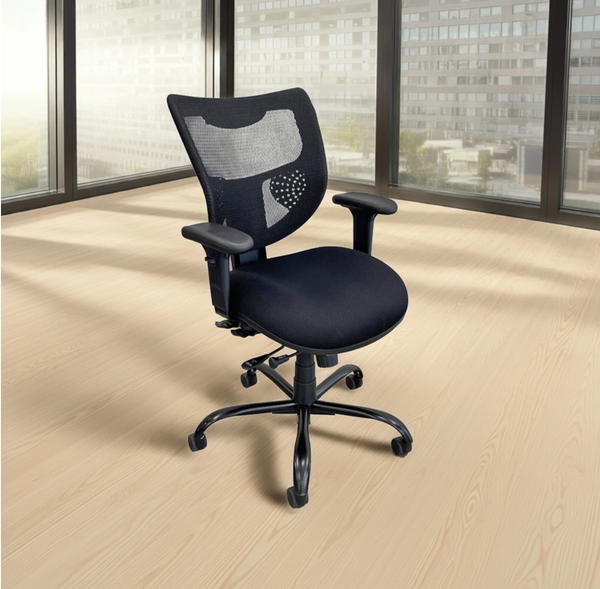
What "Intensive Use" Means: A Buyer's Guide to 24/7 and Dispatch Chairs
Sep 25th 2026
A standard office chair spends most of its life empty. Someone sits down at 9, gets up for meetings, lunch, and coffee, and leaves by 6. The chair carries a fraction of the hours in a workweek.
A dispatch chair carries all of them. Three shifts, seven days a week, one seat that never gets a rest cycle. That difference is why manufacturers build a separate category for it, and why buying the wrong chair for a control room shows up in warranty claims within a year instead of five.
What "Intensive Use" Describes
"Intensive use" and "24/7" are not marketing terms. They describe a chair built to a higher duty cycle: the number of sit-stand cycles and hours of continuous loading the frame, gas cylinder, and casters are rated to handle before failure.
A chair rated for a standard 8-hour office day gets tested and warrantied against a different usage assumption than one rated for three shifts. The base plate, cylinder, and control mechanism on a 24/7 chair are built from components rated for that continuous load, not scaled-up versions of standard office parts.
The practical result: a standard task chair in a dispatch center fails at the gas cylinder or the seat mechanism within 12 to 18 months. A chair built for intensive use is designed to run that same schedule for years.
Where This Category Gets Specified
24/7 seating shows up anywhere a seat can't sit empty:
- 911 and public safety dispatch centers
- Security operations centers and network operations centers
- Correctional facility control rooms
- Utility and power grid monitoring stations
- Manufacturing quality control and inspection stations run in shifts
- Casino surveillance rooms
- Hospital command centers and NICU monitoring stations
What these environments share is a seat that stays occupied around the clock, often by more than one person across a rotation. The chair has to hold up under different body types, different postures, and zero downtime for the frame to recover.
What to Check Before You Order
Duty cycle rating, not just weight capacity
Weight capacity tells you how much the chair holds. Duty cycle tells you how long it holds up under continuous use. A 300-pound weight capacity chair rated for standard office use is a different product from a 300-pound capacity chair rated for 24/7 operation, even if the spec sheets look similar at a glance. Ask the vendor whether the model is rated for continuous, multi-shift use, and get it in writing.
Warranty terms written for intensive use
Manufacturers write separate warranty language for intensive-use models because they expect the failure modes to differ from standard seating. A warranty naming 24/7 or multi-shift use is a signal the manufacturer engineered for that load. A standard warranty applied to a dispatch chair often has carve-outs for continuous commercial use buried in the fine print.
Adjustability for shift handoff
A chair that changes hands two or three times a day needs controls the next person can adjust in seconds: seat height, tilt tension, and armrest position, all reachable without tools. Pneumatic levers and simple dial controls hold up better under that turnover than complex multi-point mechanisms that require more precision to reset.
Casters rated for the flooring
Dispatch centers and control rooms run a mix of carpet tile, polished concrete, and anti-static flooring for electronics. Standard casters wear flat spots into anti-static flooring within months. Confirm the caster material matches the floor type before the chairs ship, not after the first replacement order.
Cleanability
Shared seats across a rotation need surfaces that wipe down between shifts. Mesh backs breathe better for long sits but hold onto odor and are harder to disinfect than vinyl or treated fabric. For facilities that sanitize between every shift, vinyl or a cleanable performance fabric outperforms mesh.
The Cost of Getting This Wrong
The math on intensive-use seating runs the opposite direction from most office purchases. A standard task chair costs less upfront and fails inside two years under 24/7 load, forcing a second purchase plus the downtime of an empty control room seat while the replacement ships. A chair built and warrantied for continuous use costs more at checkout and holds that cost steady for years.
Facilities managers who buy standard chairs for dispatch centers tend to find this out the hard way, at the point where a cylinder gives out mid-shift and there's no spare on hand.
24/7 and Dispatch Seating at InStockChairs
InStockChairs stocks 24-hour and multi-shift chairs built for continuous operation, alongside a dedicated line for call center and dispatch environments. Every chair ships from the company's own warehouse in Eden Prairie, Minnesota, not a third-party drop shipper, so the customer service team can confirm what's in stock and what the warranty covers before an order goes out.
Corporate, government, and public safety agencies can order by purchase order, and shipping is free to all 48 contiguous states regardless of order size. For a control room that can't afford an empty seat, that combination of in-stock inventory and direct answers matters as much as the chair itself.